The evidence
Red light therapy side effects for hair
The trials describe a treatment people could finish. Manuals still list redness, headache and reasons not to start. Both can be true.
We compare hats using manufacturers’ published specs, prices and the clinical research, and we don’t earn commission on links. How we review.
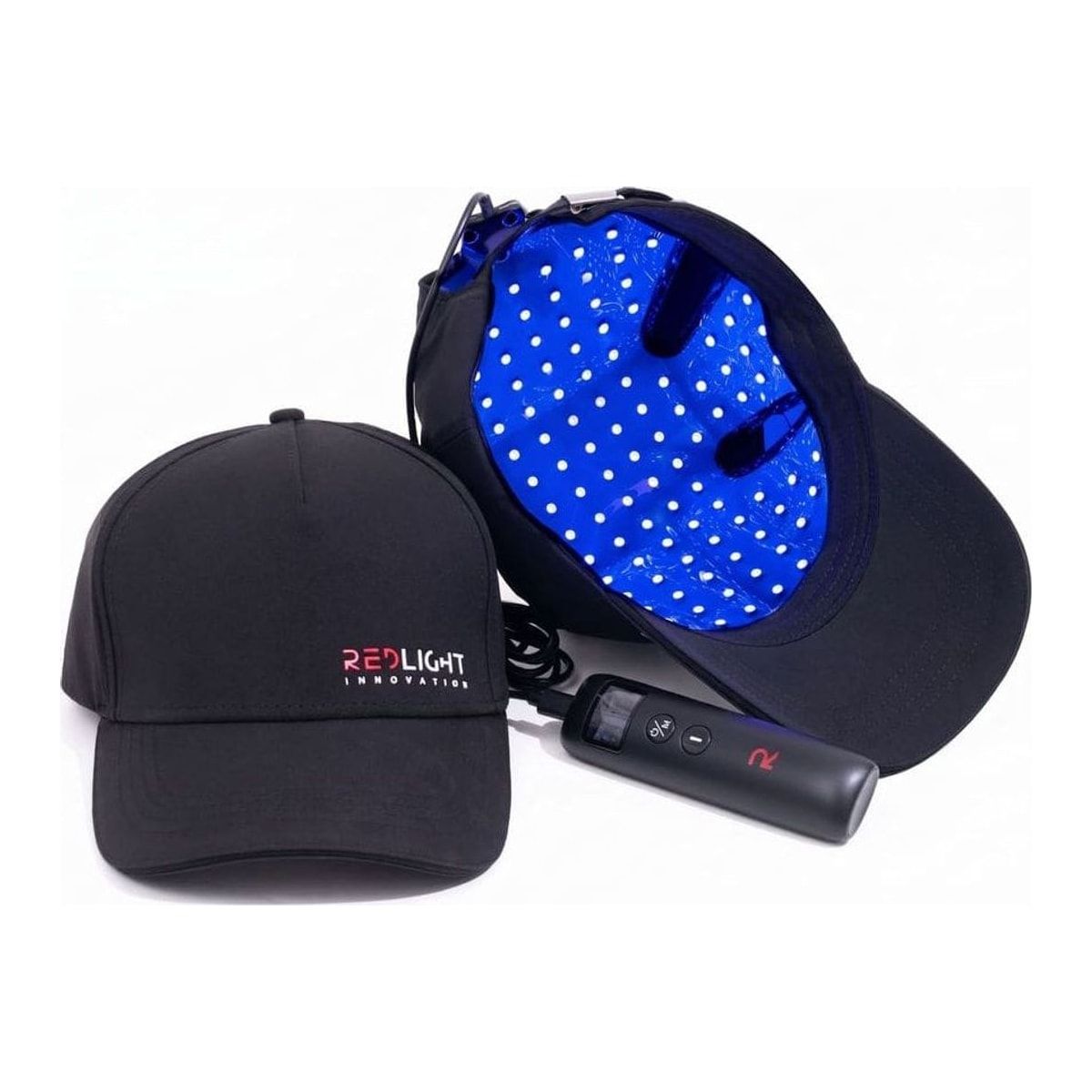
In sham-controlled trials of low-level red light for pattern hair loss, serious harm is not the main finding, and follow-up is months rather than decades. Manufacturers still list temporary redness, scalp irritation and sometimes headache. A sudden, patchy or frightening shed is a reason to see a GP, not a sign to keep going.
On this page
On this page
Adverts like to say there are no side effects. The fairer summary is smaller. In the sham-controlled trials of low-level red light for pattern hair loss, serious harm is not the story the papers tell. Follow-up is months, not a lifetime. Manuals still list redness, headache and situations where you should not start.
RedLight Innovation’s FAQ says red light is generally well tolerated, that some people get temporary redness or irritation which usually settles, and that you should stop if a reaction does not. Its six-person series reported no side effects in that group. Six people are not a safety record. The manual, and a clinician, outrank both.
What did the trials report about side effects?
The meta-analyses on does it work were built to count hairs, not to run a 20-year safety register. Across those trials, low-level light is described as something people could complete. That is a finding about the protocols they tested. It is not a finding about every cheap panel on a marketplace, or about sessions far longer than the study used.
The 2024 trial of 633 nm light against 5% minoxidil in men reported no major adverse effects in either group over six months. “No major adverse effects” still leaves room for redness, warmth, itch and tenderness. Those show up in device labelling more often than in the abstracts.
Do red light hair devices cause redness or headache?
CurrentBody’s helmet page is the most specific of the four. It tells you to test the device on the inner thigh, arm or back of the hand for a full session, wait at least 24 hours, and treat redness or itching as a sign to stop. It says skin can look red straight after use and should return to normal within one to two hours. It mentions headaches, and it says to stop if the skin feels hot during the test. Those instructions are more useful than “zero side effects”.
“Runs cool” on an LED page is a design aim. A cool device can still redden skin. If a device hurts, stop.
Does shedding mean red light therapy is working?
Pattern hair loss sheds while it progresses. A shed in the first weeks does not prove the device is working, and it does not prove the device caused it. Shedding after illness, stress, weight change, birth or medicines often settles on its own. Starting a hat does not pause either process. More hair in the plughole in the first month does not identify the cause.
Some brands, including RedLight Innovation, describe an early shed as follicles making way for better hair. The sham-controlled trials judged counts at 16 to 26 weeks. They did not establish a compulsory shed as proof the device is working. A modest change, in someone with known pattern loss, is not an emergency and is not a success. A sudden patch, a scar, or a shed that frightens you is a GP appointment. That is what the NHS page is for. Do not wait out a 90-day challenge if the picture has changed into something the challenge never described.
Is red light therapy safe for eyes, medicines and pregnancy?
Do not look into the diodes. Laser devices carry a laser class and an eye caution. LED caps are not lasers. RedLight Innovation’s page says there is nothing to protect your eyes from. Do not take that as an invitation to stare. CurrentBody lists photosensitive disorders and genetic eye conditions among the reasons to ask a doctor first. The Hat Pro’s 450 nm blue channel is another reason not to look into the panel.
CurrentBody also says to ask a doctor first if you take a medicine known to cause light sensitivity, or if you have a suspicious or cancerous lesion. If a leaflet says “stay out of strong light”, take the device manual to a pharmacist before you switch it on. Do not put a cap over a changing mole or a sore that does not heal. Red light is not ultraviolet, and it is not a treatment for skin cancer.
The density trials enrolled adults, typically with pregnancy listed as an exclusion. They are not evidence that a consumer hat is appropriate in pregnancy or while breastfeeding, and they are not evidence of harm either. Ask first. The same applies if you are trying to conceive and also looking at finasteride or minoxidil. Women should not use finasteride.
These products are not sold as children’s devices. A child with hair loss needs a paediatric or dermatology assessment, not a cap sized for an adult head.
What should you do if something goes wrong?
Stop. Note what you see, and keep the manual. If a mild reaction settles as the manufacturer described, you may not need anyone else. If it does not settle, if you are pregnant, if a lesion is involved, or if the hair loss has changed character, use a GP, NHS 111, or emergency care in the ordinary way. Do not email a shop for a diagnosis.
Report a device problem to the seller as well. If it was sold as a medical device, the MHRA describes reporting routes on GOV.UK.
Common questions
Can red light therapy cause hair loss?
Pattern hair loss continues while you start any new routine, so a shed in the first weeks does not prove the device caused it, and does not prove it is working. Sudden, patchy or severe loss should be discussed with a GP.
Does red light therapy have side effects?
Trials generally report good short-term tolerability. Manufacturers still describe temporary redness, scalp warmth or irritation, and sometimes headache. CurrentBody says redness should settle within one to two hours.
Is it safe for eyes?
Do not look into the LEDs or lasers. Laser devices carry an eye caution. LED devices are not lasers, which does not make staring at them a good idea. Follow the manual.
Can I use it in pregnancy?
The hair-density trials were not pregnancy studies. Ask the clinician looking after the pregnancy, and take the manual with you.
Sources
- CurrentBody helmet page, safety and contraindications
- RedLight Hat Pro product page
- Perez and colleagues, systematic review
- 2024 trial versus minoxidil — No major adverse effects reported in that six-month study of men.
- Sondagar and colleagues
- NHS: Hair loss