Comparison
Red light therapy or minoxidil
Minoxidil is the medicine the NHS names. Red light is the device the trials have set beside it. The results are closer, and less tidy, than the adverts.
We compare hats using manufacturers’ published specs, prices and the clinical research, and we don’t earn commission on links. How we review.
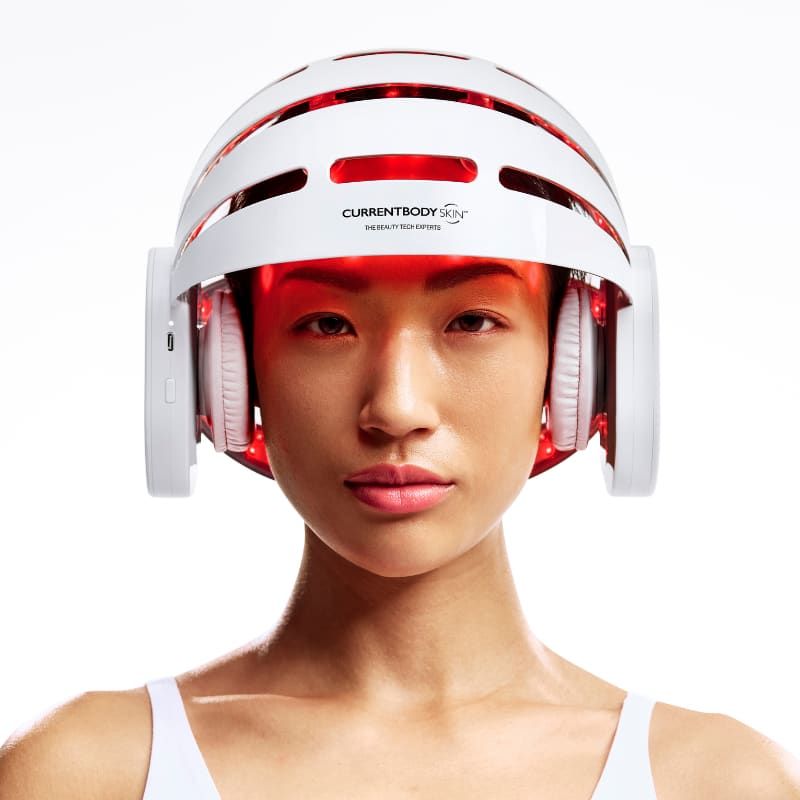
Minoxidil is a medicine the NHS names for pattern hair loss. Red light is a device the trials have set beside it. In one 2024 trial in men, a 633 nm light protocol and 5% minoxidil both raised hair density over six months, and the difference between the groups was not significant.
On this page
On this page
People usually ask this because they want one thing to buy. The honest version is two different kinds of treatment, with one decent head-to-head and a messier story when they are stacked.
Minoxidil is a medicine. The NHS names it, with finasteride for men, as a main treatment for pattern hair loss. It says the medicines do not work for everyone, only work while you use them, and are not all supplied on the NHS. Women should not use finasteride. A hat does not cancel any of that.
How does red light compare with a sham device?
Most of the red-light evidence is not “light versus minoxidil”. It is “light versus a device that does not emit light”. Liu and colleagues, in Lasers in Medical Science in 2019, pooled sham-controlled trials and found higher hair density with low-level laser therapy. The standardised mean difference was 1.316. That supports the category. It does not rank a shop cap against a pharmacy bottle. The write-up is on does it work.
What did the 2024 trial of red light versus minoxidil find?
A randomised trial in the Medical Journal Armed Forces India, published on 27 May 2024 (PubMed 40697690), compared 5% minoxidil twice a day with low-level light at 633 nm, plus or minus 10 nm, for 10 minutes, three times a week. In men who finished six months, both groups gained hair density, and the difference between the groups was not significant. The people in the trial were men. Ninety-one enrolled and 75 finished six months.
Hair density in the minoxidil group went from 97.6 to 134.6 hairs per square centimetre. In the light group it went from 104.8 to 130. Both changes were significant against each group’s own starting point. The difference between the groups was not significant. No major adverse effects were reported. The trial was single-blind.
That is a useful result, and a narrow one. The light protocol is not the 10- or 15-minute daily routine on the UK caps in our comparison. Matching the wavelength band is not matching the device.
Does adding red light to minoxidil work better?
The trials do not agree. Sondagar and colleagues, in the International Journal of Trichology, followed men using a HairMax Ultima 9 laser comb — 655 nm, about 11 minutes, twice a week — plus 5% minoxidil, against minoxidil alone, for 16 weeks. The difference was not significant. Fifty-four men were analysed. Density rose 14.78% with the combination and 11.43% with minoxidil alone. The difference was not significant (p = 0.45).
A smaller 2024 study of 24 men, using a 678 nm helmet plus 5% minoxidil against minoxidil alone, reported a larger density gain with the combination. It was a single-observer study. Together, the two papers say the literature is mixed. They do not say “use both and you will do better”.
How should you choose between red light and minoxidil?
If you are choosing a first treatment for male pattern hair loss, the NHS conversation is about minoxidil and finasteride, including the fact that they stop working when you stop. Red light is a private device with its own evidence against sham, and one trial in men where a specific light protocol looked similar to minoxidil over six months.
If you already use minoxidil and you are wondering about a hat, do not expect the trials to promise an extra gain. Ask a pharmacist or a GP, especially if you are pregnant, trying to conceive, or on other medicines. The hats themselves are compared on the homepage.
Common questions
Does red light work as well as minoxidil?
In one 2024 trial in men, a 633 nm light protocol three times a week and 5% minoxidil twice a day both increased hair density over six months, and the difference between the groups was not significant. That is one protocol, in men. It is not a finding about every hat on sale.
Should I use a hat and minoxidil together?
The trials do not agree. A 16-week study of a 655 nm laser comb plus 5% minoxidil did not find a significant extra gain. Smaller studies have reported an added benefit from particular devices. Combining them is a decision for a prescriber or a pharmacist.
Can women use either?
The NHS says minoxidil can be used for female pattern hair loss, and that women should not use finasteride. The 2024 head-to-head trial was in men only.
Will the NHS give me a red light hat?
No. Home red-light caps are bought privately. Minoxidil and finasteride are not all supplied on the NHS either, and the NHS says they only work while you use them.
Sources
- 2024 trial of 633 nm light versus 5% minoxidil — Medical Journal Armed Forces India. Men, six months, no significant difference between groups.
- Sondagar and colleagues, laser comb plus minoxidil — International Journal of Trichology. No significant difference versus minoxidil alone at 16 weeks.
- NHS: Hair loss
- Liu and colleagues, 2019 meta-analysis — Light versus sham, not versus minoxidil.
- Small 2024 helmet plus minoxidil study — A small single-observer study that reported an added density gain.